Çavuşoğlu Mahallesi, Sanatkarlar Cd. No:17, 34873 Kartal / İstanbul, Türkiye Mon - Fri: 8:00 - 18:00
+90 216 488 8885 iskarltd@iskarltd.com
Product Overview
Drawing on our extensive expertise and experience, combined with innovative barge design, ISKAR supplies floating barge cranes tailored to specific customer requirements. Our main floating crane types are designed for high-capacity operations and long outreaches of up to 36 meters.
ISKAR has successfully designed and developed a wide range of tailor-made crane models.
Barge cranes provide flexible solutions for cargo and bulk material handling in harbors and rivers where quays are limited or unavailable. Lattice-boom barge cranes can be supplied in heavy-load hook-duty or four-rope grab-duty configurations.
The main difference between hook-duty and grab-duty cranes lies in their heat dissipation requirements. Hook-duty heavy-load cranes are designed with a lightweight structure and large counterweights to facilitate mobilization and provide stability. Grab-duty cranes are designed for enhanced stability, with oversized components capable of withstanding the shock loads generated during the starting and reversing of the counterweight and payload without overheating.
ISKAR engineers have designed its cranes to move the payload without carrying unnecessary weight, such as hydraulic arms and cylinders. The additional weight of these components at extended radii can increase maintenance requirements without contributing to payload capacity.
Configuration
Crane Configuration
The dimensions and specifications of a floating barge crane are determined by its duty and the customer's specific requirements. ISKAR offers FBC model cranes with the main specifications shown in the table below.
Capacities and dimensions beyond the standard FBC models can also be designed and manufactured upon request.
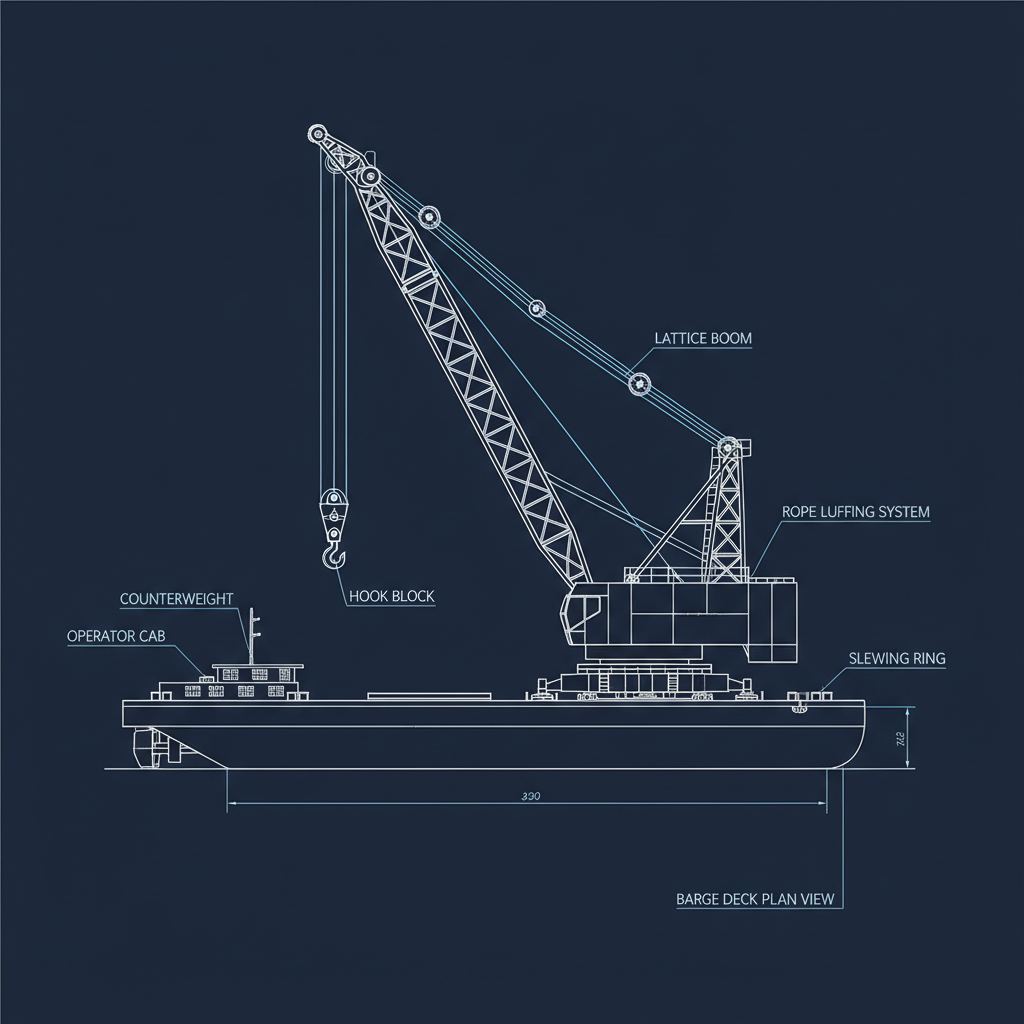
Technical Details
The upper and lower structures must be sufficiently stiff, deep, and robust to prevent flexing during high-speed duty cycles. Large-diameter slew rings are required to provide high load capacity and sufficient radius for the slew pinions. Rolling elements must also be appropriately sized; ball bearings may use elements up to 2 inches in diameter. For larger machines, a triple-row roller bearing design may be used. The slew bearing must be designed for at least one million cycles under full load.
Closed-loop hydraulic systems are preferred for duty-cycle applications. In a closed-loop system, each function has its own pump, and pressure is generated only when required. ISKAR uses high-performance hydraulic pumps and motors designed for pressures of up to 340 bar, while typically operating at approximately 180 bar. Closed-loop hydraulics operating at 180–210 bar help maintain lower operating temperatures and extend system service life.
Duty-cycle cranes use pilot-line or electronic control systems and are equipped with dual operating modes. In clamshell or dragline mode, the boom angle is displayed digitally in the operator's cab, while the load is controlled by the bucket size and opening and by sensors integrated into the winch circuits to prevent the lifting of excessive loads. Boom movement is controlled by limit switches to prevent operation outside the safe working range.
To achieve high cycle times, the full-load hoisting speed should reach up to 60 m/min, while the lowering speed should exceed 90 m/min. The engine must be sized to allow hoisting, slewing, and luffing at full speed simultaneously without exceeding 85% of the engine rating.
Heavy-duty boom construction, large-diameter heel pins, and large-diameter sheave axles are required for continuous duty-cycle applications. Chord sections should be thick and designed as compact structural sections. Sheaves must be robustly constructed, with wide bores, large diameters, and an open-throat design to accommodate heavy side loading.
ISKAR cranes for barge and ship unloading are equipped with a hydraulically raised and extendable operator's cab as standard. This provides the operator with clear visibility over the cargo holds. Standard equipment includes heating, air conditioning and climate control, a CD/radio player, and comfortable seating.
The grab is equipped with an internal reeving system connected to the closing ropes. The two holding ropes are connected via chain sections to the top frame of the clamshell.
Four-rope grab-duty applications require the wire rope to remain on a single layer of the drum, including the boom hoist wire rope, to ensure long rope life.
ISKAR cranes are grit-blasted after completion of all welding operations and immediately coated with zinc-rich epoxy. Two additional anti-corrosion epoxy coats are then applied, followed by a polyurethane topcoat.
Automatic lubrication is a standard feature on duty-cycle cranes, ensuring that all critical points, including the slew bearing, slew pinion, head sheaves, boom sheaves, and boom trunnions, receive the required grease.
ISKAR barge cranes can be configured for both clamshell and hook-lifting operations and are designed for installation on ships or barges. They can also be mounted on gantries or fixed pedestals.
See our completed barge crane installations worldwide.
Explore More
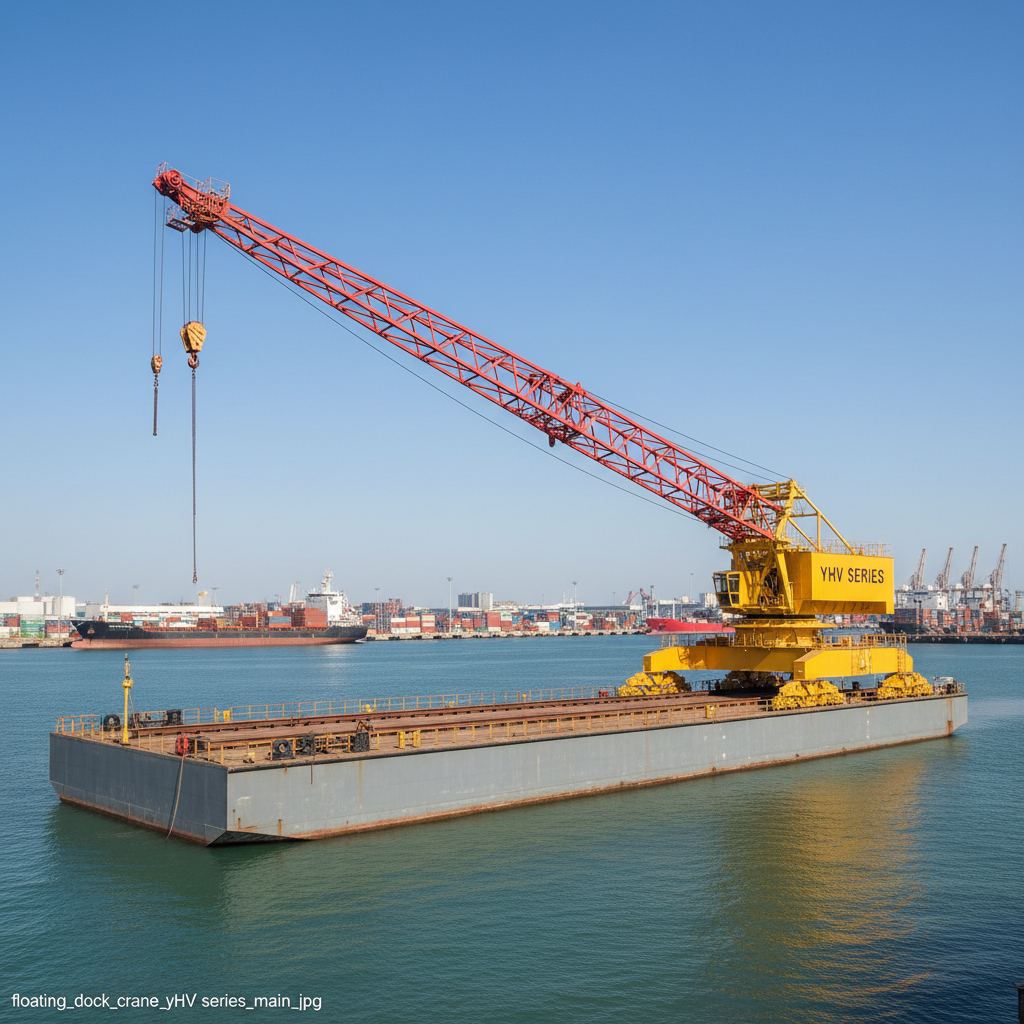
Shipyard Equipment
Purpose-built FDC series cranes for floating dock applications, engineered for narrow rail spans and extreme heel and trim angles with full towing capability.
Learn More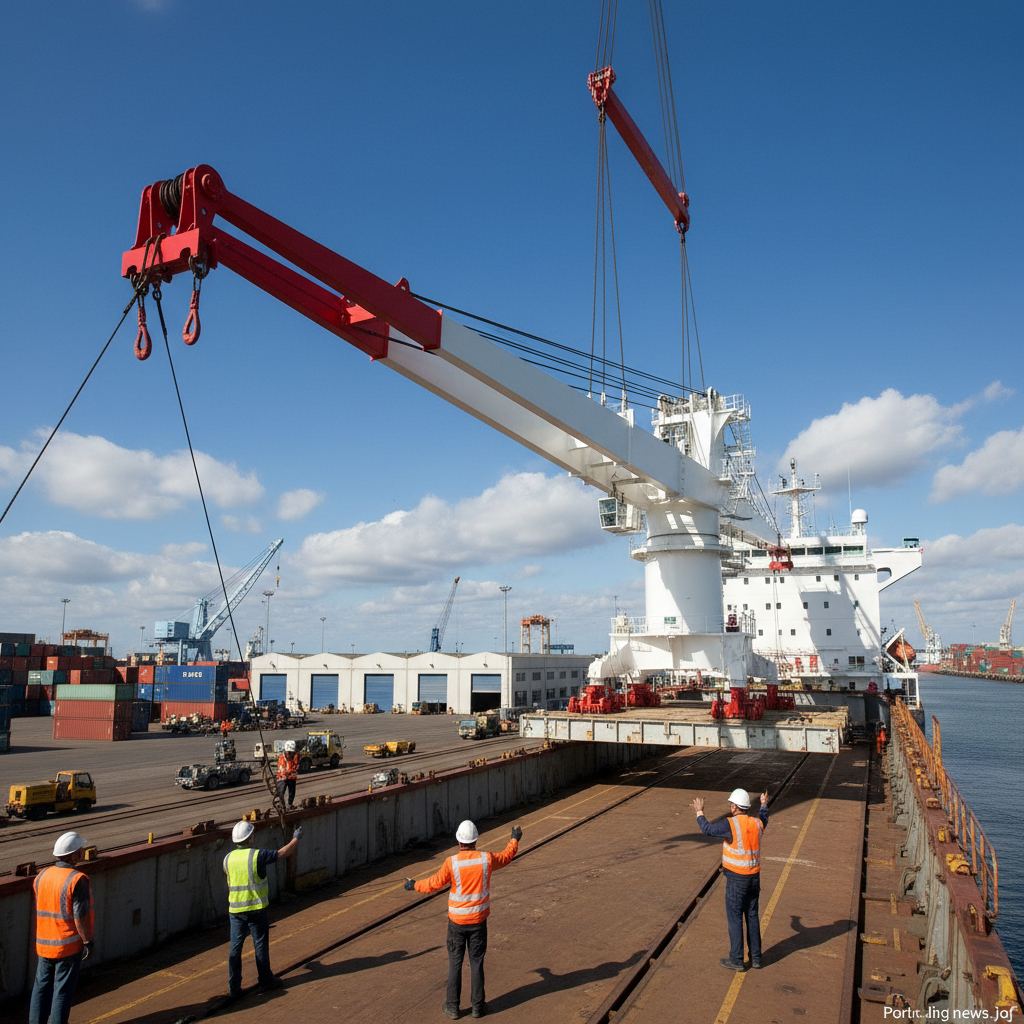
Port Equipment
Heavy-duty port crane solutions engineered for high-throughput cargo operations, delivering reliable performance across general cargo, container, and bulk handling applications.
Learn More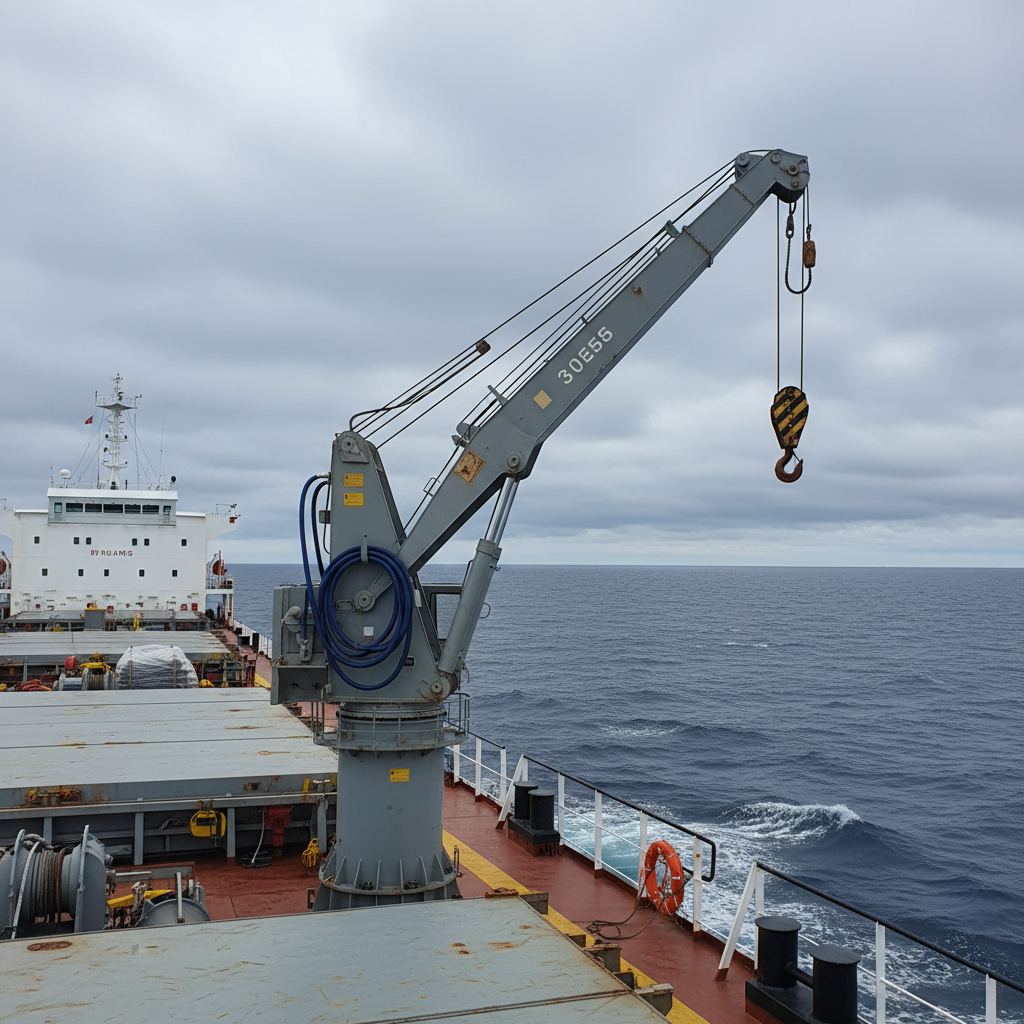
Marine Equipment
Compact and robust hydraulic deck cranes for vessel-mounted applications, designed for reliable cargo handling operations in demanding marine environments worldwide.
Learn More